
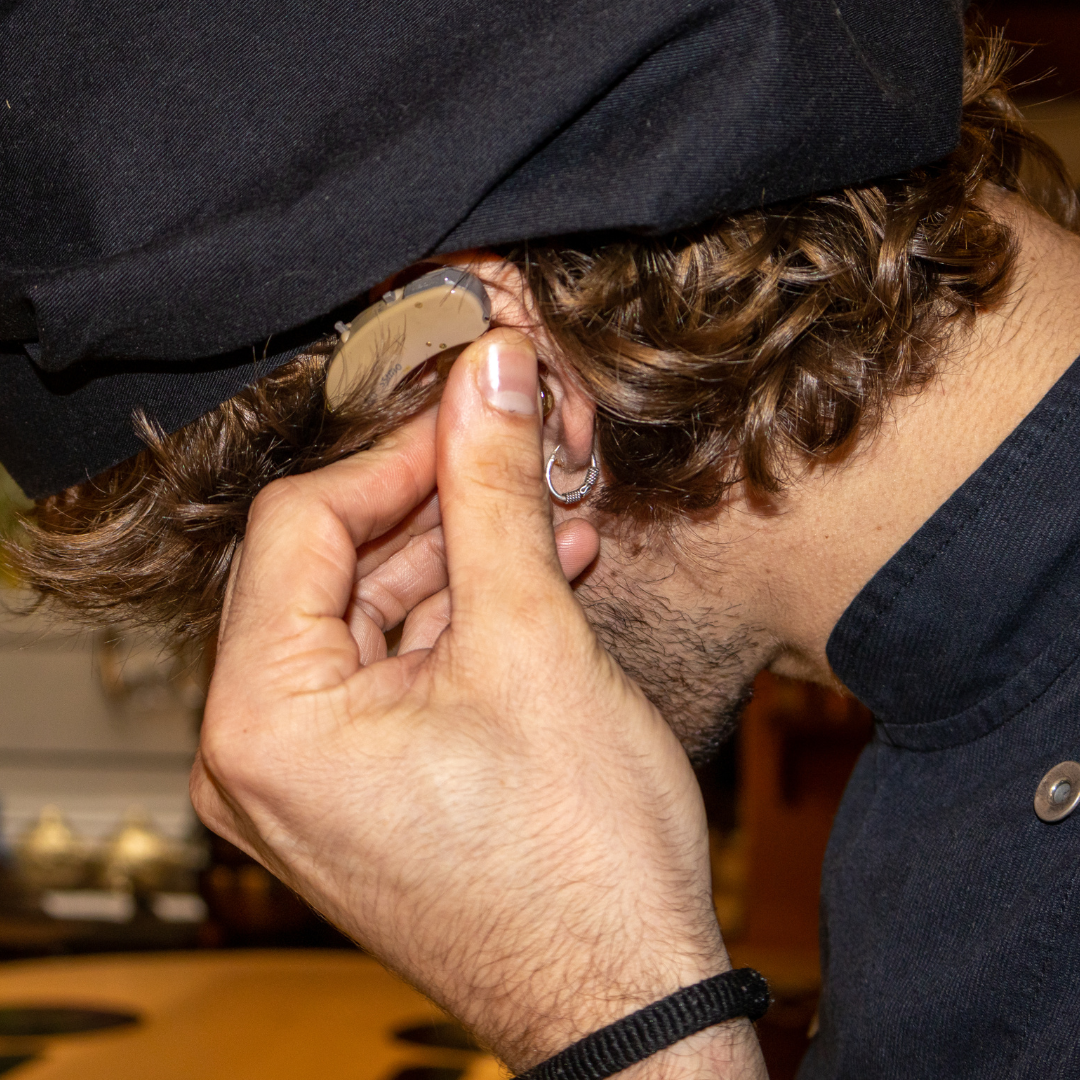
Restaurant conversations can be difficult to follow when environmental noise competes with your focus and hearing. Our specialists can evaluate hearing under both calm and noisy listening conditions to establish why noisy rooms present such difficulty. After diagnosing the source of your difficult hearing, we design targeted interventions tailored to your listening needs.
Understanding the Contrast Between Quiet Hearing and Restaurant Noise
Low-noise environments yield an advantageous signal-to-noise ratio where primary speech remains significantly louder than background sound. Commercial restaurant spaces present the polar opposite acoustic dynamic. Cross-talk, ambient music, dishware noise, and harsh acoustic reverberation interfere with speech clarity, forcing your brain to labor to extract the target voice.
This symptom pattern often reflects underlying high-frequency hearing loss, central processing dysfunction, or physiological aging of the auditory nerve. Visual limitations from low lighting, cognitive fatigue, and sitting farther away from conversational partners amplify speech degradation. Some people have normal results on a basic hearing test but still perform poorly on speech-in-noise testing. Disproportionate difficulty in restaurants justifies professional clinical assessment even if your everyday home hearing appears intact.
Clinical Evaluation of High-Frequency Hearing Loss
We begin by reviewing your history of communication difficulties, prior noise exposures, ringing or tinnitus, pharmaceuticals, and unilateral symptoms.
Diagnostic pure-tone audiometry establishes the softest auditory thresholds you can perceive across standardized frequencies via air and bone conduction pathways. Patients with high-frequency hearing loss typically exhibit a sloping audiogram configuration where sensitivity steadily declines at elevated pitches. Additional testing may include tympanometry to assess middle-ear function and word-recognition testing to measure speech understanding.
Standard quiet test booths fail to simulate real-world restaurant noise, making speech-in-noise testing a crucial clinical tool. The test assesses word and sentence discrimination as background acoustic competition intensifies. Together, these results show whether the problem involves audibility, speech clarity, background-noise processing, or a combination of factors.
How Do Auditory Processing Disorders Affect Hearing in Adults?
An auditory processing disorder compromises how the central auditory pathways and brain decode incoming acoustic information. While peripheral ears may register soft tones normally, the auditory cortex struggles to filter competing noise, resolve phonetic contrasts, or keep pace with rapid conversation. Our clinical team starts by examining peripheral auditory thresholds, subsequently deciding if an auditory-processing test battery or multidisciplinary consultation is necessary.
Practical Strategies for Improving Speech Understanding in Noise
Targeted behavioral changes optimize the acoustic speech signal reaching your auditory system while providing clear visual context. Before dining out, choose a quieter restaurant or visit during an off-peak time. Facilities equipped with upholstered booths, acoustic baffles, fabric curtains, carpeted floors, and soft materials prove far easier on hearing than minimalist, hard-tiled spaces.
In-venue communication guidelines:
- Reserve a table located well away from kitchen doors, active bar counters, overhead speakers, and banquet groups.
- Situate yourself with a structural wall behind you to minimize distracting ambient noise from behind.
- Position yourself to directly face companions under bright lighting to enhance facial comprehension.
- Reduce physical spacing between yourself and companions to maximize direct speech perception.
- Direct your better-performing ear toward the companion you most need to understand.
- Ask speakers to reword the specific phrase you missed rather than repeating their initial wording.
- Actively confirm key information rather than smiling and guessing at ambiguous dialogue.
- Step away for a brief auditory rest when cognitive listening fatigue begins to set in.
- Request that dining partners articulate words distinctly at an unhurried, natural speed.
- Shouting can distort speech and does not necessarily make words easier to understand.
What Are the Best Tools for Hearing with Background Noise?
Optimal technological solutions depend entirely on the etiology of your symptoms, target acoustic spaces, and whether measurable hearing loss exists. Modern clinical hearing aids integrate directional microphone polar patterns, automated digital noise suppression, and personalized restaurant memory settings to highlight frontal speech and reduce background competition. Users should establish realistic expectations because no hearing device can fully eradicate all unwanted ambient speech.
A remote microphone can provide a stronger improvement in the signal-to-noise ratio. The accessory is worn on the lapel or set near the speaker, streaming their voice directly into compatible hearing aids or wireless audio receivers. This targeted setup effectively neutralizes the negative impacts of room distance and interfering background noise.
Alternative assistive hearing tools include:
- Omnidirectional table microphones designed for group dining tables
- Telecoil components connecting directly to public hearing-loop systems
- Mobile phone live-transcription apps offering real-time conversational subtitles
- Smart earbuds offering dedicated speech-in-noise amplification settings
- Sound-meter apps and acoustic dining directories for locating quiet venues
We will help compare available technology, verify device compatibility, and instruct you on utilizing your selected hearing equipment.
Clinical Audiology Care for Hearing in Complex Noise
A professional clinical assessment moves beyond basic baseline statements like “I hear fine in quiet rooms.” We examine the challenging acoustic venues, conversational setups, and noise profiles you encounter to select appropriate diagnostic tests. Your comprehensive workup may involve pure-tone hearing thresholds, middle-ear testing, recorded word recognition, and speech-in-noise measures. Central auditory-processing testing is considered whenever clinical intake and initial test outcomes point toward higher-order deficits.
Any sudden, asymmetric, or rapidly deteriorating hearing loss demands immediate medical evaluation by an ear, nose, and throat physician. Personalized patient care establishes the true medical source of your listening problems instead of assuming ambient noise is solely responsible.
Arrange a Hearing Evaluation With Us Now
When dining out causes you to guess at words, detach from family, or experience severe listening exhaustion, book a comprehensive hearing evaluation with us. We will help you navigate hearing in noisy environments by implementing advanced hearing aid options, assistive accessories, or therapeutic auditory strategies tailored to your lifestyle.
Contact our practice today to book your consultation and take a decisive step toward reconnecting in social settings.