
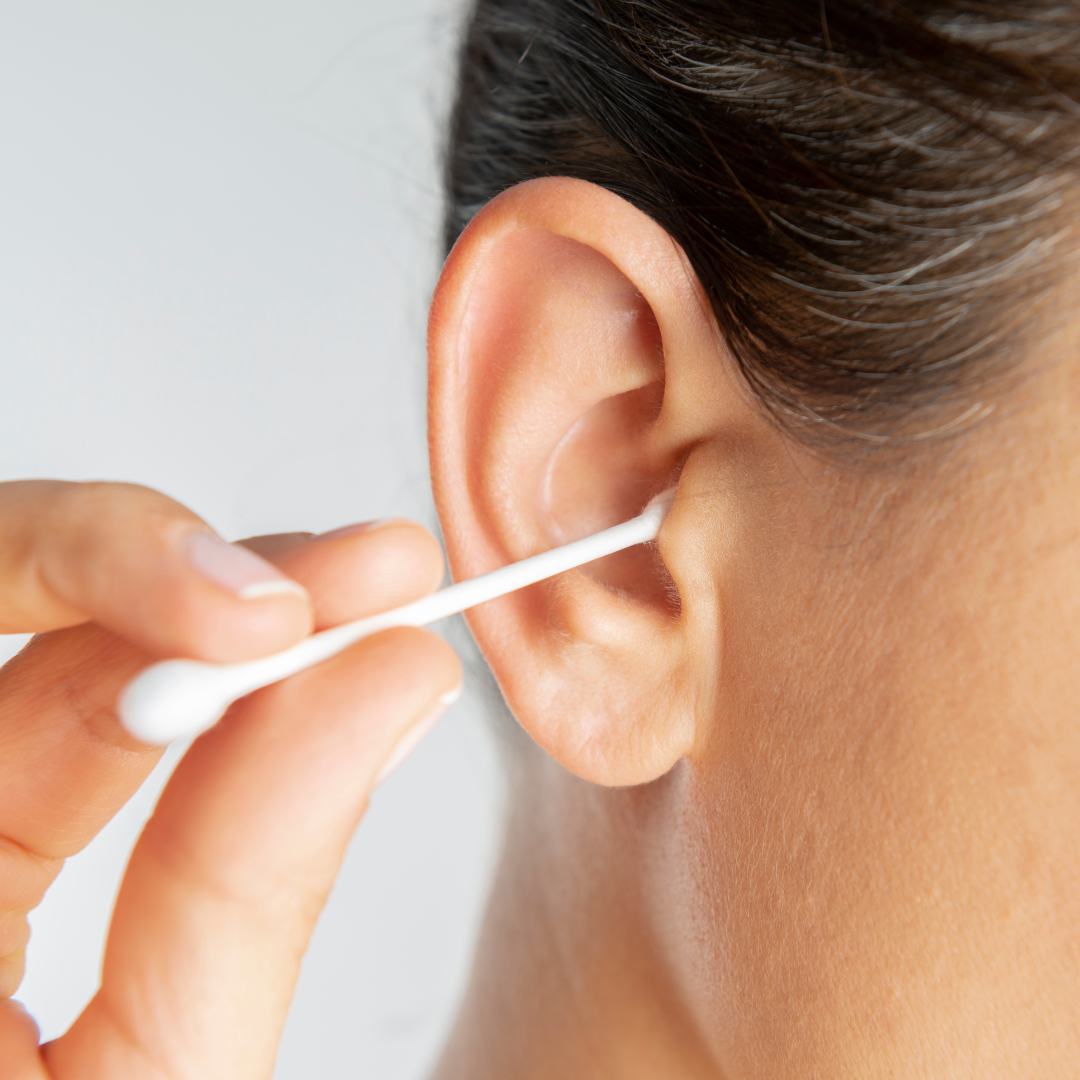
Cotton swabs may seem like convenient ear-cleaning tools, but inserting one into the ear canal can make cleaning harder over time and may damage your ears. Our specialists determine if cerumen warrants clinical clearing and advise on targeted methods designed to protect your hearing health. Ear canals typically maintain themselves without assistance; nonetheless, if stubborn buildup develops, we help individuals safely eliminate excess wax.
Why Are Q-Tips Bad for Your Ears?
Natural earwax, medically termed cerumen, does not represent bodily dirt. It serves by ensnaring foreign debris, discouraging bacterial invasion, lubricating skin linings, and safeguarding the inner canal. Jaw movement and normal skin migration gradually carry old wax toward the ear opening, where it flakes away or washes off during bathing.
Inserting a cotton swab directly into the auditory canal interferes with this natural clearance mechanism. Though the cotton tip may capture superficial debris, it frequently rams the larger wax volume deeper toward the tympanic membrane. Ongoing cotton swab use regularly condenses wax into a solid obstruction, causing a congested feeling that drives repetitive cleaning attempts.
Swabs can be safely applied along the outer ear cartilage, but they should never be inserted past the canal aperture.
Clinical Complications Associated with Q-Tip Insertion
Canal skin is thin, vascular, and highly vulnerable to mechanical abrasions. Tiny skin lacerations provoke pain and bleeding while forming entry pathways for pathogens, multiplying the chance of external ear infections. A cotton tip may also detach and remain inside the canal.
Potential audiological complications include:
- Deep mechanical cerumen impaction
- Canal abrasions, dermal irritation, edema, and hemorrhage
- Acute otitis externa or canal infection
- A cotton tip or other material trapped in the ear
- Ruptured, torn, or perforated tympanic membrane
- Damage to the tiny acoustic middle-ear bones
- Sudden alterations in auditory acuity or permanent hearing changes
- Acute tinnitus, vertigo, or intense otalgia
Although catastrophic damage remains relatively rare, unexpected arm bumps, hand slips, or excessive insertion depth easily cause acute harm.
Clinical Guidelines on Earwax Removal Frequency
Most people do not need to remove earwax on a schedule. Healthy ear physiology steadily propels wax toward the surface, where daily hygiene cleans the external ear. Excessive cleaning strips natural oils, inflames delicate canal skin, and substantially elevates the chance of infection or impaction.
Extraction is medically indicated when cerumen fully occludes the lumen, blocks visual examination of the eardrum, compromises hearing aid function, or induces pain.
Safe Protocols for Managing Cerumen at Home
If earwax is not causing symptoms, leaving it alone is usually the safest option. Simply cleanse the external ear using a damp, gentle washcloth, allowing the internal canal to clear independently.
Should cerumen require breakdown, our team may recommend commercial cerumen-removal drops or formulas featuring saline, mineral oil, glycerin, or carbamide peroxide. Apply only the specified dosage and never exceed the designated application duration outlined on the label. Stop treatment promptly if the drops elicit sharp pain, noticeable dizziness, allergic rash, or worsening hearing complaints.
Home flushing is contraindicated in many cases and should solely be conducted after an expert confirms safety and reviews proper methods. Under no circumstances should you ever use a pressurized dental oral irrigator in the ear. Reject risky methods such as ear candling, rigid metal scoops, camera-guided probes, hairpins, and home suction gadgets. These hazardous instruments often cause cutaneous burns, sharp cuts, eardrum ruptures, or compounded cerumen impaction.
When Should I See a Doctor for Earwax Removal?
Schedule an appointment when an ear remains plugged after an appropriate softening treatment, wax appears deeply impacted, or home care repeatedly fails. Professional intervention is highly advisable for individuals with mobility challenges, narrow ear canals, hearing aid devices, or surgical backgrounds that make home care dangerous.
You should seek professional assessment for:
- Unresolved ear discomfort, persistent canal itching, or touch sensitivity
- Blood, cloudy purulence, clear fluid leaks, or foul-smelling ear discharge
- Elevated body temperature or edema surrounding the ear structures
- Sudden-onset tinnitus or vestibular dizziness
- Rapid-onset hearing impairment or ongoing hearing deficits post-cleaning
- Suspected tympanic membrane tears or retained cotton foreign bodies
- Chronic cerumen impactions that clog or disrupt hearing aids
Treat sudden hearing loss in one ear as a medical emergency rather than assuming it’s wax. Fast diagnostic testing reliably differentiates a conductive wax plug from an acute, time-sensitive sensorineural emergency.
Professional Techniques for Cerumen Removal
The clinical process starts with high-magnification otoscopy or microscopy to establish cerumen presence and screen for infections, abrasions, or tympanic perforations. The ideal extraction strategy is dictated by the consistency of the wax, ear canal dimensions, clinical background, past ear procedures, and patient physical stability.
In-office clinical procedures include:
- In-office or pre-visit cerumen-softening drop applications
- Gentle, temperature-controlled fluid irrigation provided the tympanic membrane is intact
- Gentle micro-suction performed under clear binocular visualization
- Direct physical removal using precision instruments such as loops, curettes, or tiny forceps
Continuous visual monitoring enables the practitioner to navigate around sensitive epithelial tissue and pause immediately if discomfort arises. Utilizing more than one removal technique may be necessary to resolve dry or severely compacted wax. Following the procedure, the ear is re-evaluated to guarantee that both the canal passage and eardrum are clear and healthy. When symptoms like fullness, tinnitus, vertigo, or hearing loss continue, supplementary audiological assessments can uncover alternate conditions.
Request an Appointment for Clinical Earwax Removal
Should your ears feel congested or your hearing performance decline, arrange an evaluation with our audiology clinic instead of reaching for swabs. During your consultation, we examine current symptoms, prior ear surgeries, hearing aid habits, home remedies, and physiological factors that drive wax accumulation. Contact our office directly to book your safe cerumen-removal appointment.