
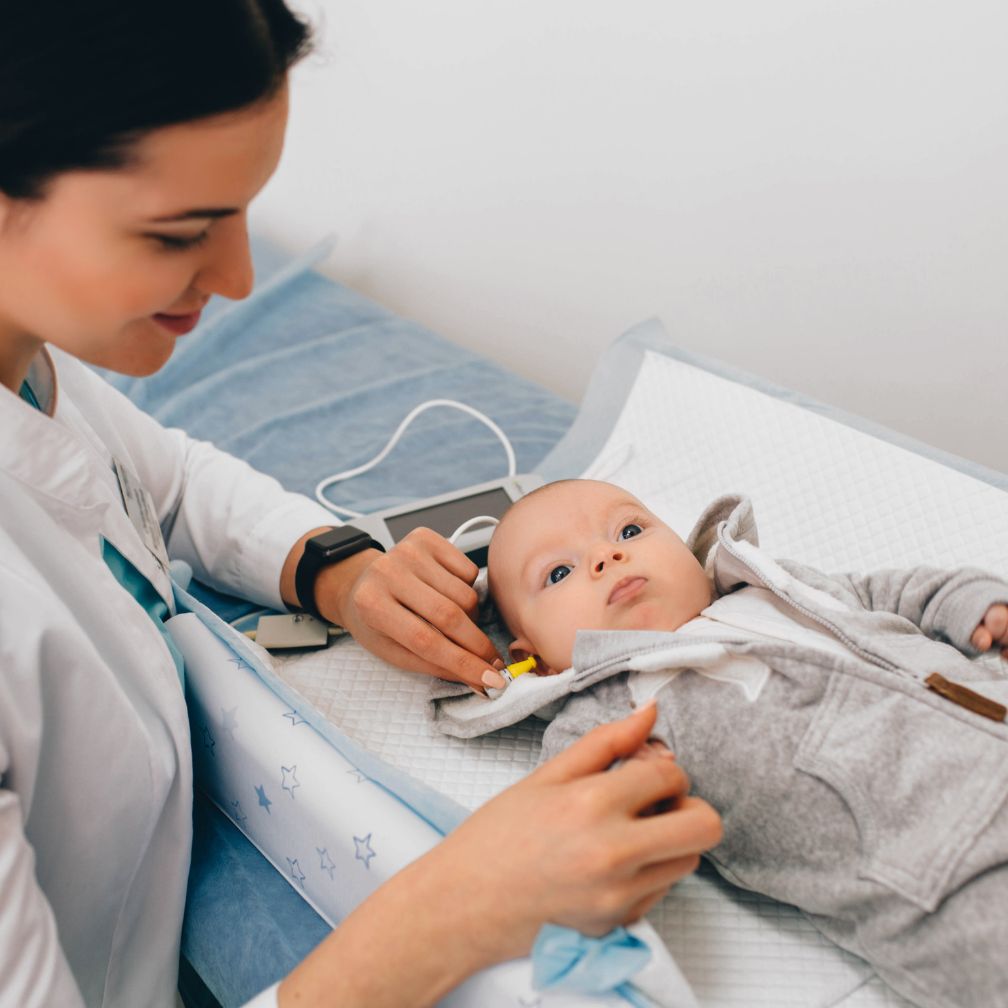
For new parents, finding that their newborn presents auditory issues remains extraordinarily shocking and painful. Nevertheless, the reassuring fact stands: with swift screening and appropriate intervention, infants facing hearing loss will routinely flourish. Unquestionably, such infants can develop spoken language, interpersonal skills, and solid relationships across their world, realizing a wonderful life!
Utilizing individual hearing aids alongside surgical cochlear implants provides two highly successful approaches for supporting infants with hearing loss. In the following segment, we detail their functional mechanisms and clarify how to select the ideal match for your infant.
Exploring Causes of Auditory Loss in Infants
Hearing impairment in young infants can trace back to multiple potential origins, including:
- Identified genetic predispositions (even in the absence of documented familial lineage)
- Severe perinatal infectious diseases including cytomegalovirus (CMV) or rubella
- Obstetric complications, including systemic oxygen lack or early gestational delivery
- Selected pharmaceutical treatments deployed inside hospital neonatal units
What stage carries the most weight? Early diagnostic testing. This necessity explains why babies across the United States undergo auditory checks before departing the nursery. Experienced pediatric audiologists maintain the standardized “1-3-6” care benchmark:
- Initial baseline screening completed before 1 month of life
- Official hearing diagnosis confirmed within 90 days of life
- Specialized treatment (incorporating clinical devices or speech therapy) started prior to 6 months post-birth
Executing these procedural steps offers infants their ideal path toward flourishing speech, language mastery, and neurological health. Whenever you seek direction on these auditory tests, your child’s pediatrician will gladly advise you!
Understanding Amplification Devices for Infants
For infants impacted by mild to severe hearing loss, specialized hearing aids consistently serve as the foundational first step. These miniature, wearable instruments boost incoming sound waves, assisting babies in catching spoken words and environmental sounds more distinctly.
Modern infant hearing instruments function as:
- Dermatologically and structurally safe for newborn babies aged just a few weeks
- Constructed using pliable, comfortable custom molds that adjust during early physical growth
- Assembled with tamper-proof battery doors and pediatric-specific safety elements
- Precisely tuned by a licensed pediatric audiologist to accommodate your child’s specific hearing levels
During physical development, hearing aids necessitate regular clinical recalibrations to ensure snug placement and precise amplification.
Pediatric Cochlear Implants: An Advanced Solution
When a baby exhibits severe to profound sensorineural hearing loss and receives minimal relief from hearing aids, specialists often advise a cochlear implant. Diverging significantly from traditional hearing devices, surgical cochlear implants:
- Need to be installed via an outpatient surgical procedure within the patient’s inner ear
- Route around damaged areas inside the inner ear anatomy
- Change ambient sound waves into direct electrical impulses that actuate the nerve of hearing
Advanced surgical cochlear tools represent:
- Formally FDA-cleared for infants starting at 9 to 12 months of age
- Deeply effective when supported through early developmental habilitation and strong home support
- Recommended solely following comprehensive diagnostic assessments by an expert audiologist and ear, nose, and throat doctor
This evaluative framework encompasses diagnostic imaging, advanced hearing evaluations, and realistic discussions regarding long-term developmental milestones.
Hearing Aids vs. Cochlear Implants: What’s the Difference?
- Mild to severe hearing loss: Hearing Aids; Severe to profound hearing loss requires Cochlear Implants
- Non-Invasive acoustic positioning: Hearing Aids; Invasive surgical procedure: Cochlear Implants
- Acoustic volume boosting: Hearing Aids; Electrical signal stream conversion: Cochlear Implants
- Application starts during early infancy: Hearing Aids; Access starts at 9-12 months: Cochlear Implants
Closing Perspective: Choosing Between Hearing Aids and Implants
In the event your infant receives a hearing loss diagnosis, you have options and plenty of support. Thanks to collaboration with dedicated pediatric audiologists, many children go on to develop communication skills that mirror those of their age group.
Whether your child is a candidate for hearing aids or cochlear implants, acting swiftly unlocks lifelong developmental success.
Have questions about your baby’s hearing health? Reach out to our specialists today for a complete diagnostic review and tailor-made care roadmap.